
Yield Strength vs Weight: Evaluating Moment of Inertia
Thinner metal stamping profiles don't always mean sacrificing structural integrity.
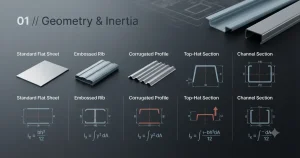
In precision metal stamping, adding mass is often a knee-jerk response to deflection challenges. But simply increasing material mass drives up costs without addressing the root mechanical requirement. By optimizing the moment of inertia through precise cross-sectional area adjustments—and fine-tuning coil width and thickness—engineering teams can maintain component rigidity while shedding unnecessary weight.
Material selection completes the formula. Utilizing a high-grade 4140 alloy or specialized high nickel alloys allows machinery builders to capitalize on elevated yield strength and consistent Young's modulus. Operating from our manufacturing unit in Nagpur and warehousing in Taloja, partners Mr. Prashant Narkhede and Mr. Shrenik Shah bring more than four decades of industry experience. Every custom batch is verified with our Shimadzu Spectrometer and Hitachi XRF gun to guarantee exact alloy composition.
How does your engineering team approach the balance between cross-sectional geometry and yield strength in critical stamping jobs?